



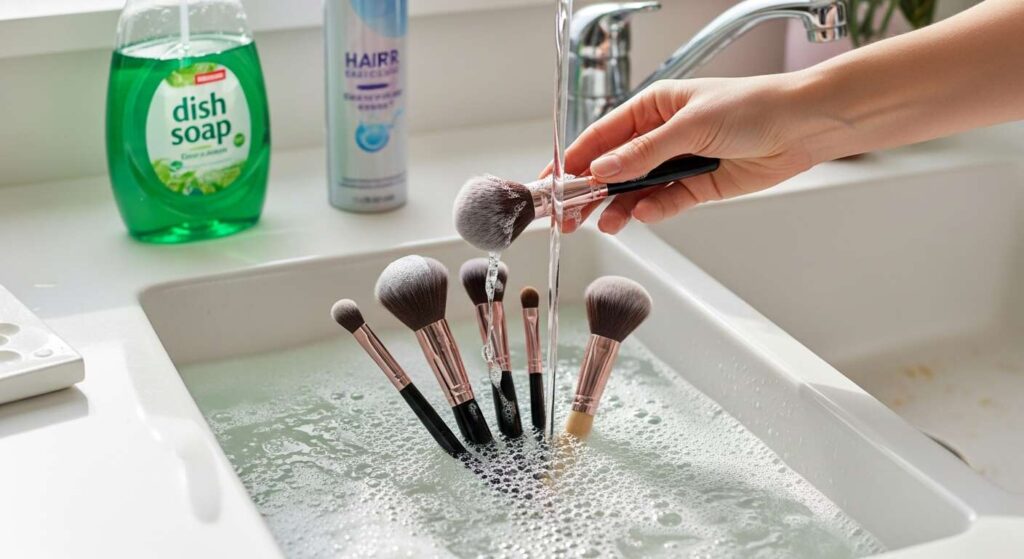
Hairbrushes accumulate product residue faster than most people realise, with hairspray being one of the most stubborn culprits. This sticky coating not only transfers back onto clean hair but also attracts dust and bacteria, compromising both hygiene and styling results. The combination of hot water and dish soap offers a surprisingly effective solution that dissolves these stubborn deposits without requiring expensive specialised cleaners or excessive scrubbing time.
Why dish soap dissolves hairspray
The science behind this cleaning method lies in the chemical composition of both products. Hairspray contains polymers and resins designed to create a firm hold on hair strands, whilst dish soap is specifically formulated to break down stubborn grease and sticky substances. Understanding this interaction explains why this household staple outperforms many dedicated brush cleaners.
The chemistry of surfactants
Dish soap contains surfactants that reduce surface tension between water and oily substances. These molecules have two distinct ends: one that attracts water and another that attracts oil and residue. When applied to hairspray-coated bristles, surfactants surround the polymer particles, breaking them apart and allowing water to rinse them away. This dual-action mechanism makes dish soap particularly effective against the alcohol-based and synthetic ingredients found in most hairsprays.
Temperature’s role in dissolution
Hot water accelerates the cleaning process by softening the hardened hairspray residue. The heat causes the polymers to become more pliable and less adhesive, whilst simultaneously activating the surfactants in the dish soap. This combination creates an optimal environment for thorough cleaning:
- Increased molecular movement enhances chemical reactions
- Softened residue releases more easily from bristles
- Improved penetration into dense brush areas
- Faster overall cleaning time compared to cold water methods
This scientific foundation explains why professional hairstylists have relied on this method for decades, making it a proven approach rather than merely a household tip.
Optimal hot water method: step-by-step guide
Implementing the correct technique ensures maximum effectiveness whilst protecting your brushes from damage. The process requires minimal equipment but benefits significantly from following the proper sequence and timing.
Preparation and initial rinse
Begin by removing loose hair from the brush using a comb or your fingers. Fill a basin or sink with hot water at approximately 50-60°C, ensuring it’s comfortably warm but not scalding. Add one to two tablespoons of dish soap, creating a sudsy solution. Submerge the brush bristles downwards, keeping wooden handles or cushioned bases above the waterline to prevent damage to these components.
Soaking and agitation process
Allow the brush to soak for five to ten minutes, depending on the level of product build-up. During this period, gently swirl the brush in the water every few minutes to encourage dissolution. For particularly stubborn residue, use an old toothbrush to work between the bristles, applying gentle circular motions. The following table illustrates recommended soaking times based on brush condition:
| Residue Level | Soaking Time | Agitation Frequency |
|---|---|---|
| Light build-up | 5 minutes | Once at midpoint |
| Moderate coating | 7-8 minutes | Every 2-3 minutes |
| Heavy accumulation | 10-12 minutes | Every 2 minutes with brushing |
Rinsing and drying technique
After soaking, rinse the brush thoroughly under warm running water, ensuring all soap residue is removed. Shake vigorously to expel excess water, then place the brush bristles downward on a clean towel. This positioning prevents water from seeping into the cushioned base or handle, which could cause mould or deterioration. Allow to air dry completely before use, typically requiring four to six hours depending on bristle density.
Having mastered the fundamental cleaning process, understanding which materials and precautions to consider becomes essential for long-term brush maintenance.
Safety tips and materials selection
Not all brushes respond equally to hot water treatment, and certain precautions prevent accidental damage to both tools and hands during the cleaning process.
Brush material considerations
Different brush constructions require adapted approaches. Natural bristle brushes tolerate hot water well but should never be fully submerged if they feature wooden handles or bases. Synthetic bristles withstand higher temperatures without damage. Cushioned brushes with rubber padding require particular care, as excessive heat can degrade the cushion over time. For these varieties, use warm rather than hot water, maintaining temperatures below 45°C.
Protecting your hands and workspace
When working with hot water, consider these safety measures:
- Wear rubber gloves to protect hands from prolonged heat exposure
- Test water temperature before submerging brushes
- Use a dedicated basin rather than kitchen sinks to avoid cross-contamination
- Place towels beneath the cleaning area to catch drips and prevent slipping
- Keep the process away from electrical outlets or devices
Choosing the right dish soap
Whilst most dish soaps perform adequately, certain formulations offer superior results. Look for products labelled as grease-cutting or containing citrus extracts, as these contain higher concentrations of effective surfactants. Avoid heavily perfumed varieties, which may leave residual scents that transfer to hair. Eco-friendly options work equally well and reduce environmental impact, making them suitable for regular use without concern about chemical build-up.
These safety considerations and material-specific approaches ensure effective cleaning without compromising brush longevity, particularly valuable for those managing multiple brushes in professional settings.
Quick tips for salons and busy mornings
Professional environments and time-constrained individuals benefit from streamlined approaches that maintain hygiene standards without disrupting schedules.
Express cleaning for immediate use
When time doesn’t permit full soaking, a rapid rinse method provides temporary relief. Hold the brush under hot running water whilst applying dish soap directly to the bristles. Massage the soap through with fingers for thirty to sixty seconds, then rinse thoroughly. This technique removes surface residue and restores approximately 70-80% of the brush’s cleanliness, sufficient for same-day reuse whilst planning a more thorough cleaning later.
Salon rotation systems
Professional stylists often maintain multiple brushes to ensure continuous availability. Implementing a rotation schedule maximises efficiency:
- Designate specific brushes for morning, afternoon, and evening appointments
- Clean used brushes during quiet periods or end-of-day routines
- Maintain a ready-to-use set whilst others undergo thorough cleaning
- Label brushes by last cleaning date to track maintenance schedules
Portable cleaning solutions
For mobile hairstylists or those travelling frequently, creating a portable cleaning kit ensures consistent brush hygiene. Include a small bottle of concentrated dish soap, a collapsible basin, and microfibre towels in your travel bag. Many professionals also carry disposable brush cleaning wipes for emergency situations, though these should supplement rather than replace proper hot water cleaning.
Establishing these efficient practices naturally leads to questions about how frequently brushes require this level of attention to maintain optimal performance.
Recommended cleaning frequency for your brush
Determining the appropriate cleaning schedule depends on usage patterns, product application habits, and hair type characteristics.
Frequency based on usage intensity
The following table provides guidance for various user profiles:
| User Type | Recommended Frequency | Key Indicators |
|---|---|---|
| Daily hairspray users | Weekly | Visible residue, sticky bristles |
| Occasional product users | Fortnightly | Dusty appearance, reduced grip |
| Minimal product application | Monthly | Hair accumulation, dullness |
| Professional salon brushes | After every 3-5 clients | Product transfer between clients |
Adjusting for hair characteristics
Oily hair types transfer more sebum to brushes, which combines with hairspray to create particularly stubborn residue. Individuals with this hair type should increase cleaning frequency by approximately 30-40% compared to standard recommendations. Conversely, those with dry or fine hair may extend intervals slightly, though never beyond monthly cleaning to prevent bacterial accumulation.
Signs requiring immediate cleaning
Regardless of your regular schedule, certain indicators demand prompt attention:
- White or grey film coating the bristles
- Sticky texture when touching the brush
- Unpleasant odours emanating from the brush
- Reduced styling effectiveness or hair tangling
- Visible dust particles trapped in residue
Understanding when and how often to clean naturally connects to recognising common mistakes that undermine these efforts.
Errors to avoid when cleaning the brush
Even well-intentioned cleaning attempts can damage brushes or prove ineffective when certain pitfalls aren’t recognised and avoided.
Temperature extremes and material damage
Using boiling water ranks amongst the most common mistakes. Whilst hotter temperatures might seem more effective, water above 70°C can melt synthetic bristles, warp plastic components, and damage adhesives holding brushes together. Conversely, lukewarm or cold water fails to activate the dish soap’s surfactants adequately, resulting in incomplete residue removal and wasted effort.
Inadequate rinsing consequences
Leaving soap residue on bristles creates a new problem: the remaining surfactants attract dirt and product more aggressively than clean bristles would. Always rinse until water runs completely clear and no suds remain. This typically requires two to three minutes of thorough rinsing under running water, far longer than most people initially estimate.
Improper drying practices
Several drying errors compromise brush integrity:
- Storing brushes whilst still damp encourages mould and mildew growth
- Using hairdryers or radiators for faster drying can warp materials
- Placing brushes bristles-up allows water to pool in the base
- Storing in enclosed spaces prevents adequate air circulation
Excessive force during cleaning
Aggressive scrubbing damages bristles and loosens them from the base. The hot water and dish soap combination performs the heavy lifting chemically, requiring only gentle agitation to assist the process. Patience rather than pressure yields superior results whilst extending brush lifespan significantly.
The hot water and dish soap method offers a scientifically sound, economically sensible approach to maintaining hairbrushes free from hairspray build-up. By understanding the chemical interactions at play, following proper techniques, and avoiding common mistakes, anyone can achieve professional-level brush cleanliness with minimal investment. Regular maintenance not only improves styling results but also extends the functional life of quality brushes, making this simple routine a valuable addition to personal care habits. Whether managing a single brush at home or multiple tools in a salon environment, these principles ensure consistently clean equipment ready to deliver optimal performance.